
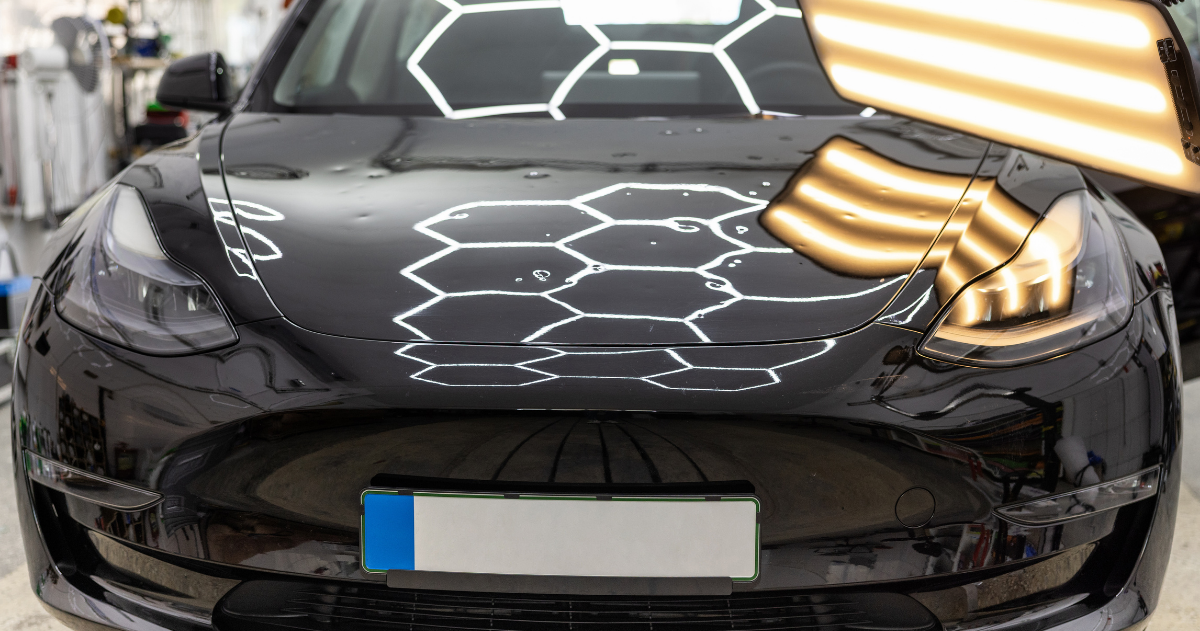
It’s undeniable that worldwide weather is getting more volatile, and that goes for Canada, too. The storms that surged across Ontario and Quebec earlier this summer resulted in $439 million in insured damage, and hail damage to cars surely played a leading role. Hail usually measures around ¾ of an inch, but the larger stones can exceed six inches in diameter and weigh over a pound. No wonder hail can wreak havoc on the body of a car!
Hail damage can appear so extreme that many drivers may decide that repairing their car is simply not worth the hassle, but this may not be the right decision. In this month’s blog, we’ll consider the costs and benefits of repairing hail dents so that you’ll be able to decide the best way to proceed if your car ever falls victim to these unpredictable and destructive little ice balls.
- Insurance Coverage
Repairing hail dents is not covered by standard collision policies – only by comprehensive insurance, which you need to pay extra for. So, the first step is to check the fine print on your policy.
If coverage applies, hail damage is considered a “no-fault” claim that does not affect your driver safety record. However, if a severe hailstorm causes extensive damage across a large area, there may be an uptick in overall market rates.
If it’s going to cost more to fix your car than what it is worth to begin with, your insurance provider may declare it a total loss—even though it may still be mechanically fit to drive.
- Value Retention
No doubt about it … a car with obvious hail damage is going to command a lower resale price from dealerships and private buyers alike. The good news is, there should be little to no loss of resale or trade-in value when you invest in high-quality collision repairs to restore the car to pre-damage condition.
The only time it may not be worth fixing hail damage to your car is when it has very high mileage and is already heavily depreciated.
- Degree of Damage
This Reddit page talks about how hail damage to cars can vary in different parts of the world. The general consensus is that pea-size or dime-size hail may not cause any visible damage at all, whereas golf-ball size or bigger stones will almost certainly dent body panels, shatter glass, and can even fall with enough force to bend or warp the frame.
Of course, wind-driven hail will cause even more damage, and a hail event that goes on for hours is going to leave even more dents in your car!
- Type of Damage
According to this AutoSavvy article, hail damage to cars generally falls into four main categories:
Cosmetic Damage with Intact Paint: Small, shallow dents to panels that leave the paint undamaged are the easiest to fix, often using paintless dent repair. Be aware that even if the damage seems minor, putting off collision repairs for dents can lead to further problems.)
Cosmetic Damage with Scratched/Chipped Paint: Harder and/or larger hailstone impacts will both dent the surface and mar the paint, requiring the use of body filler, repainting, or full panel replacement.
Severe Damage with Intact Paint: Deep dents caused by severe hail could conceivably cause damage to a car’s mechanical systems without harming the paint itself.
Severe Damage with Scratched Paint: This is the costliest combination, sometimes involving repairs to both mechanical systems and exterior panel replacement.
Is it Possible to Prevent Hail Damage?
Clearly, parking under some kind of shelter is the best way to protect your vehicle. However, if you get caught in a hailstorm with no protection in sight, there are still a few things you can try to minimize the fallout:
Keep a hail cover in your trunk: These portable, heavy-duty tarps are easy enough to find, not that expensive, and can give you some peace of mind if you know hail is expected when you’ll be out and about.
Pull in side mirrors and use your floor mats: Protect your windshield by covering it with your floor mats, rubber side up.
Towels and/or blankets: Place them over all your flat surfaces, tucking edges into the doors, hood and trunk to hold them securely.
Hail Repair You Can Trust
After 45 years in business, we’ve seen hundreds of hail damaged cars come through the doors, and we do our utmost to restore each one to as close to pre-hail condition as humanly possible. Our manufacturer-certified collision repair technicians are experts in the many ways of repairing hail dents, including the latest paintless dent repair techniques.
No matter what degree of hail damage your car has, just bring your car in for us to have a look. We’ll be happy to make repair recommendations, provide you with a detailed estimate of time and costs, and help you get your insurance claim properly processed.
Our weather may be getting less predictable, but you can always count on Mitek.